The Forgotten Old School Arcade That Forged My First Gaming Community
I never forgot my very first arcade community, even if it was filled with people I never knew.
When it comes to games these days, I feel like finding a place where you feel welcome and comfortable is just a few mouse clicks away. You can find yourself on a subreddit, in a Discord community, in a voice channel, or on a group chat or thread online where you can commiserate and talk about your favorite games. In fact, the low barrier to entry via the internet has made it easier to not only connect with local folks but with far-flung interested gamers from around the world. Yes, there's a great deal that could be better when it comes to online gaming communities, but it's still one of the best things to happen to games for bringing people together.
But it wasn't always this easy. I'm old enough to remember when we didn't have anything like the internet, where you weren't able to talk to people around the world unless you wanted to pay a giant long-distance phone bill, and where, for the most part, you were limited to local pockets of gamers who you couldn't really chat with unless you were standing or sitting right next to them.

Enter the old school arcade, which I miss to this day as one of the first times I was able to be a part of a community. The one I knew of, and which I spent my younger years at, was called The Galaxy Arcade, and every day, in my nascent youth, it entertained and wowed me.
I remember The Galaxy because as a young gamer, the only games we had access to were the simple pixel-y graphics that accompanied the early Atari, Nintendo, and Sega consoles, so anything put out by an arcade machine was, at the time, a graphical marvel.
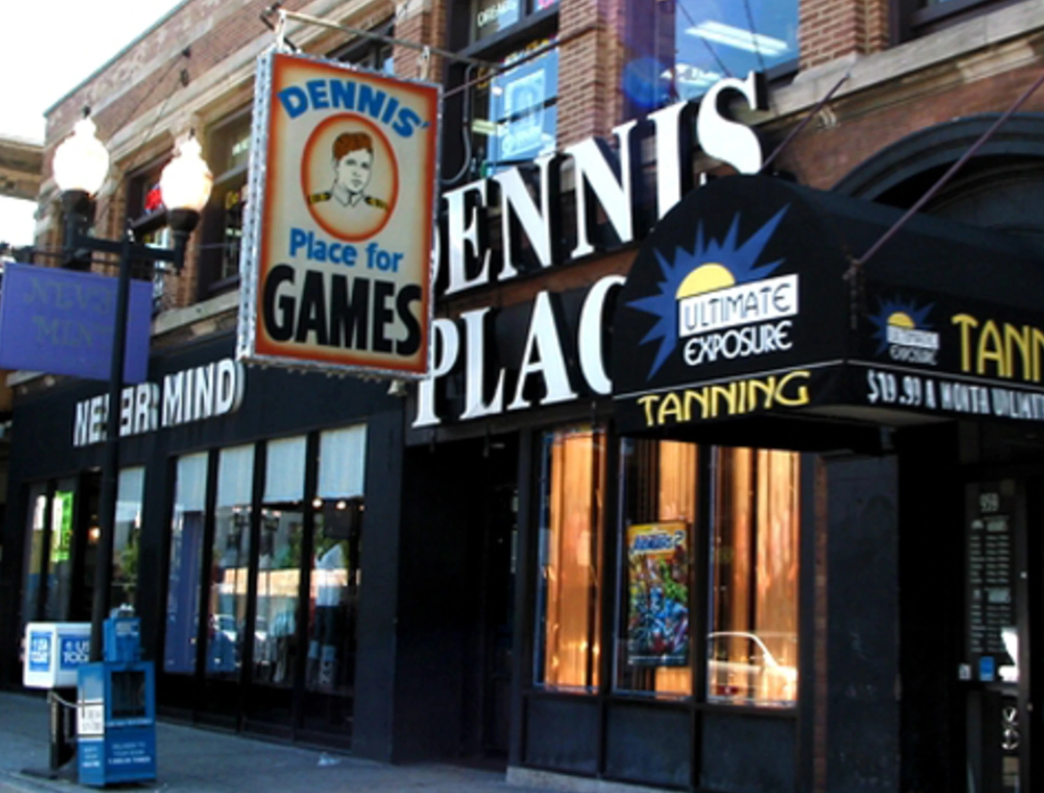
I also remember it because it was distinctly questionable in appearance, like many arcades of its time. The Galaxy was on my way home from school, and it opened late - in the afternoon, when the owner wisely would target the youths heading out from a long day of classes for a few dollars of video game goodness. The building had a dark, tinted glass exterior that betrayed none of what happened inside, and if it wasn't for the sign outside, you'd think it was some kind of nightclub, or a seedy bar, or something else that probably had no business being open when the sun was out. And that's the way we liked it - because if you didn't have dark inside space to make your arcade cabinet displays pop, you probably weren't running your arcade right.

The interesting thing about arcades back then, at least as I experienced them, was that a sense of community formed around them, especially when it came to regulars who played only a couple of games, like I did. Back then, I was a mostly Street Fighter II and Mortal Kombat player, which meant I was standing next to the same gamers over and over again on the regular. With my trusty Dhalsim and Scorpion at my side, I got to know my regular opponents not by name, but by one or two distinct features and who they played.
There was the guy with the nose ring who only played Ryu, but who had probably mastered every part of Japan's best fireball-thrower with alacrity.
There was the short kid whose head barely cleared the joystick controls when standing and always needed a stool, but who could button smash his way to victory if you were careless.
And there was the unassuming girl with the red-rimmed glasses, who everyone underestimated just for being a girl (a practice, sadly, that continues even into today's games community), but who quickly gained respect, if not a little fear, for near-flawless Chun-Li play, to the point where a single mistake pretty much meant the round.
There were more faces like this, more competitors, more regulars who I shared a nod, a friendly high five, and a knowing grin with when they'd place their token on the bottom edge of the cabinet above their preferred side, signaling they were next in line.
You might think that at this point I'd be telling some grand tale about how the friendship that started in the arcade eventually went outside of it, that I forged a bond with a small, but diverse group of kids that would last for years. There are lots of stories from gamers my age who experienced this, but for me, there was no Goonies or Sandlot or similar coming-of-age story that involved the fellow kids I met at the arcade.
No, this community, for me, was short-term - it was self-contained in the rounds of pixel-based fighting after a long school day, the occasional co-op game to take a break from testing each other's skills, and the sharing of new video game news. We never learned names, talked about anything else besides why Capcom decided to make things different with Street Fighter II Champion or Turbo Edition or what way to beat secret characters in Mortal Kombat, or anything else personal. And that's the way we liked it.
It's as if there was unspoken agreement that in the arcade, we were all kids just looking to have fun, and that nothing else need be relevant. There was none of the community that would eventually form and give rise to the tournaments that would bring moments like EVO's now-famous Justin vs. Daigo Chun-Li vs. Ken match above, or some wild story about how we saved the arcade from closure, or anything like that. It was just afternoons to forget about whatever might be troubling us at school, or at home, and just be kids, just be gamers, just enjoy a shared hobby. It's a feeling that I think can get complex in today's perpetually online world, but which was for the most part, so simple back in

Eventually, graphics caught up to the point where I could play fighting games at home, and graduating and moving on to a bigger school meant the arcade wasn't on my way home anymore. Most importantly, I got older, caught up in the journey every teen takes to discover themselves, make new friends, and share new experiences. The games would stick with me, all the way until I couldn't believe that I was working for companies that made or sold them and beyond, but the arcade became a distant memory. Today's arcades are either novelties, parts of entertainment centers or bars, nostalgia bombs, and (for the most part) have left their seedy exterior roots behind - and it's just not quite the same as it was when they were first trying to break into the entertainment biz.
Even though I never really went back to the Galaxy, I took something important from it that lasted long past its doors closing - that feeling of community, of shared joy, of mutual entertainment and low-stakes competition. In those couple of hours almost every day was small, anonymous, and short-lived, but it was a community nonetheless. There was something almost pure about it, and it's a feeling I've worked to make others feel in the years after that, as I became involved in communities both offline and online that brought people together. I don't know that I'd have felt that way had I not been a part of that little, questionably-lighted place packed full of arcade cabinets, where the tokens flowed and the the societal, gender, and cultural barriers didn't exist, but I'll never forget what it gave me.


Comments ()